HD Live Ultrasound Benefits and Clear Limits Explained
HD Live Ultrasound Benefits and Clear Limits Explained
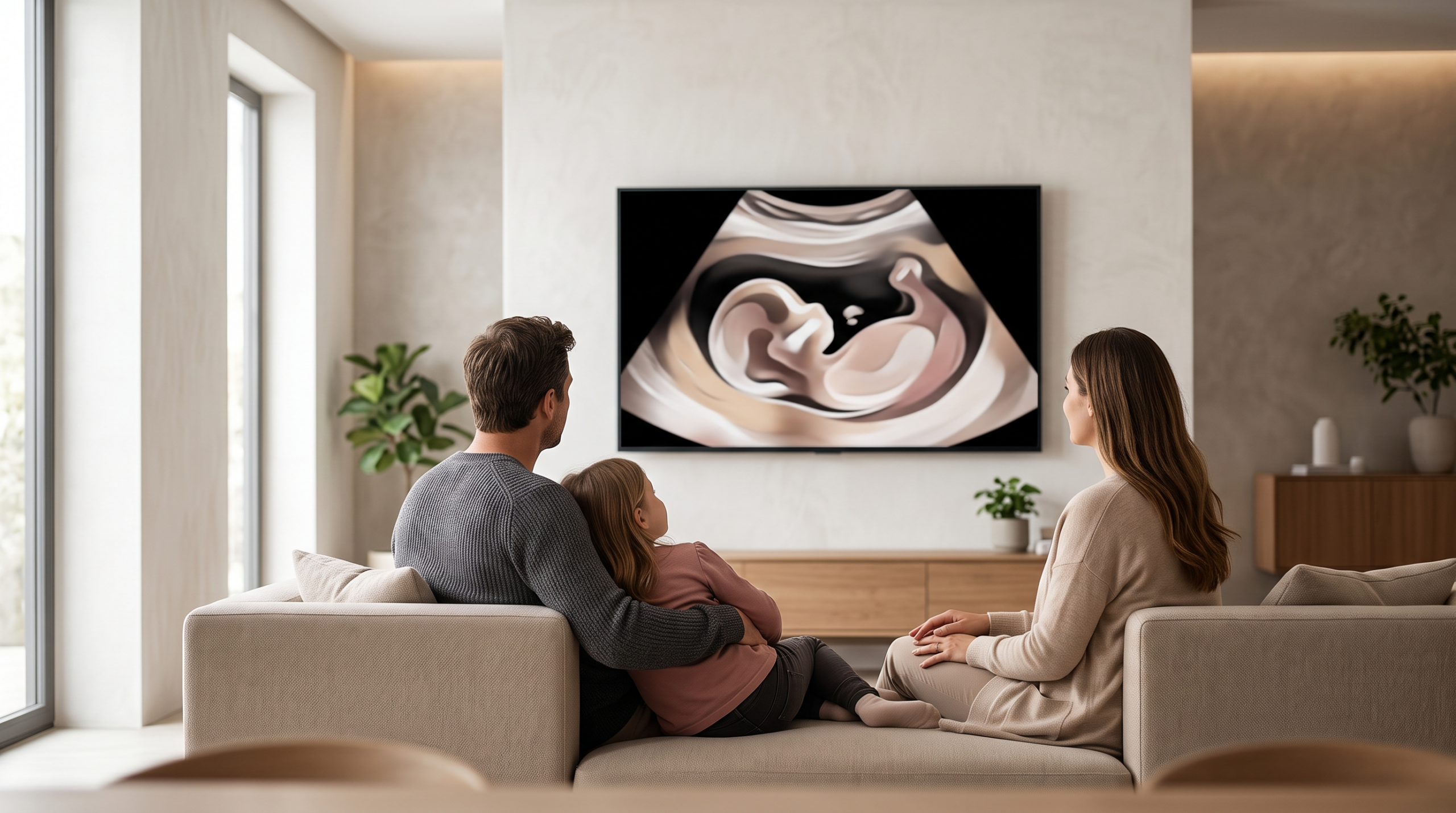
Short answer: HD live ultrasound is a rendered, moving presentation of ultrasound data used during some non-diagnostic viewing sessions. Its benefits are experiential: the added lighting and depth cues may make a visible pose or movement easier for a family to understand. It does not diagnose health, confirm development or replace medically indicated prenatal imaging.

What HD live can and cannot do
- It can present a moving rendered view with lighting and depth cues.
- Its main benefit in this context is the family viewing experience.
- It cannot establish health, anatomy, development or a diagnosis.
- Visibility changes with position, movement, fluid, tissue and angle.
- Current outputs and policies must be confirmed for the chosen location.
3D Baby presents 2D, 3D, 4D and HD live viewing across location packages. Understanding what each label describes helps a family compare the viewing experience, files and current policies without mistaking a more realistic-looking image for a medical finding.
What HD live means in this service context
The terms on a keepsake-ultrasound menu describe ways of presenting ultrasound information. A 2D view is a flat cross-sectional image. A 3D view renders volume. A 4D view displays changing 3D images over time. HD live is a rendered presentation intended to add lighting and depth cues to that moving view. It does not create a different medical examination merely because the picture looks more detailed.
Families should also distinguish HD live viewing from the separate 8K image enhancement option. That page describes a digital enhancement applied to images. It should not be presented as the same thing as the real-time HD live viewing format used during a session.
What families may value about the viewing format
The practical value is experiential. A moving rendered view may help invited family members understand the image, observe a visible pose, and share a keepsake moment. The session can also provide a structured time to view and save images according to the package selected. Those are experience and memory benefits, not medical benefits.
Image appearance varies. Position, movement, gestational stage, the amount and location of fluid, tissue between the probe and the area being viewed, and the available viewing angle can all affect what appears on screen. A service description should not promise a specific face view, pose, expression, image clarity, or number of usable images.
A non-diagnostic session is not prenatal care
3D Baby’s location package pages describe these sessions as non-diagnostic. That boundary needs to appear near the service explanation and booking decision, not only in small print. A non-diagnostic viewing session does not assess fetal health, confirm that development is normal, replace a medically indicated ultrasound, or provide a diagnosis.
Health Canada states that diagnostic fetal ultrasound should be used when medically indicated and discourages ultrasound used solely to create keepsake images or videos. Its concern is that a non-clinical session does not offer a medical benefit and that exposure duration and technique are not controlled for a medical purpose. Read the current Health Canada medical ultrasound guidance before deciding whether this type of session is appropriate for you.
If you have a question about pregnancy, pain, bleeding, movement, development, dates, anatomy, or another health concern, contact your healthcare provider. Do not wait for or rely on a keepsake session to answer it. A studio should direct medical questions back to the appropriate care team.
Use prudent viewing practices
Ultrasound uses non-ionizing sound waves, but that does not mean any exposure for any purpose is automatically appropriate. Health Canada publishes safe-use guidance for diagnostic ultrasound that emphasizes prudent use and qualified operation in medical settings. The United States Food and Drug Administration likewise advises prudent use and discourages non-medical keepsake-only scanning in its ultrasound imaging guidance.
Before booking, ask how session duration is controlled, whether a session is extended to pursue a preferred image, and what happens when a useful view is unavailable. Current operating details must come directly from the business; the appearance of the image cannot answer those questions.
Set expectations before the appointment
| Question | What to confirm before booking |
|---|---|
| What am I booking? | A non-diagnostic viewing session with the selected presentation formats and confirmed inclusions. |
| What can be assessed? | No medical assessment should be implied; health questions belong with a healthcare provider. |
| Is a clear face view assured? | No. Position, movement, fluid, tissue, and viewing angle can affect visibility. |
| What will I receive? | Only the files, prints, clips, or access method listed in the current location package. |
| What if the view is limited? | The current studio policy should be explained before booking and confirmed by the owner. |
| Is 8K the same as HD live? | No. The site describes 8K as a separate digital image-enhancement option. |

Confirm the location-specific package
3D Baby publishes separate package information for locations, including the Windsor package page and Sarnia package page. Families should use the page for the location they plan to visit because session options and deliverables can differ. Any time-sensitive terms should be confirmed on the current page or directly with the studio.
A useful package summary should identify the location, session type, viewing formats, delivery method, guest policy, accessibility information, rescheduling path, and what happens if the available view is limited. It should avoid combining features from different locations into one universal promise.
Questions to ask before choosing a session
- Is this session explicitly described as non-diagnostic?
- Which viewing formats are included at the location?
- How is the session kept within its planned duration?
- What files or physical keepsakes are included?
- How and when are digital items delivered?
- What is the current policy when position or visibility limits the view?
- Are there guest, child, mobility, or room-capacity considerations?
- Who should be contacted for a booking question?
Keep medical and keepsake records separate
A keepsake image can be meaningful to a family, but it should not be inserted into a medical narrative by the studio. The service team should not interpret an image, speculate about a condition, or reassure a family about health. If something prompts concern, the appropriate action is to stop the non-diagnostic discussion and direct the family to their healthcare provider.
The booking and consent path should use the same language as the service page. A prominent boundary is more useful than a disclaimer that appears only after payment or at the appointment.
How to choose HD live or another output
Begin with what the family wants to take away from the session. HD live may suit someone who values a rendered live-viewing experience. Standard 3D stills may be enough when selected images are the priority. A 4D output is relevant when motion clips matter. A separate digital enhancement may appeal to someone who wants a later stylized image, but it should not be confused with what appears in real time.
| Primary goal | Format to ask about | Important limit |
|---|---|---|
| Selected volumetric images | 3D stills | Visibility and included files vary |
| Movement during the session | 4D or HD live viewing | No specific pose or clear face view is assured |
| Rendered lighting and depth cues | HD live | Realistic appearance is not diagnostic evidence |
| A later stylized image | Digital enhancement option | Processing is separate from live viewing and medical care |
Once the output is clear, compare the package by location. Confirm the planned duration, file delivery, guest and accessibility rules, privacy terms, rescheduling conditions and limited-view policy. If the explanation uses medical language, promises reassurance or suggests the session can replace prenatal care, stop and discuss imaging with the responsible health-care provider.
Common HD live ultrasound mistakes to avoid
- Treating a realistic-looking rendering as proof of health or development.
- Using HD live, 4D and 8K enhancement as interchangeable labels.
- Assuming a face view, pose, expression or number of usable images is guaranteed.
- Comparing packages without checking the location and current deliverables.
- Using an optional viewing session to delay a medical question or appointment.
- Accepting an unverified credential, safety promise or operating claim as fact.
Frequently asked questions
Is HD live ultrasound a medical scan?
Not in the context of the non-diagnostic sessions described on these package pages. Medical ultrasound and prenatal questions should be handled through your healthcare provider.
Does HD live always produce a clear face image?
No. The available view depends on conditions at the time of the session, including position, movement, fluid, tissue, and viewing angle.
Is 8K enhancement performed during the live scan?
The owned site describes 8K as a digital enhancement of images, so it should be treated as a separate add-on rather than another name for HD live viewing.
Where should I check current package details?
Use the package page for the location you intend to visit, then confirm any time-sensitive details directly with the studio.